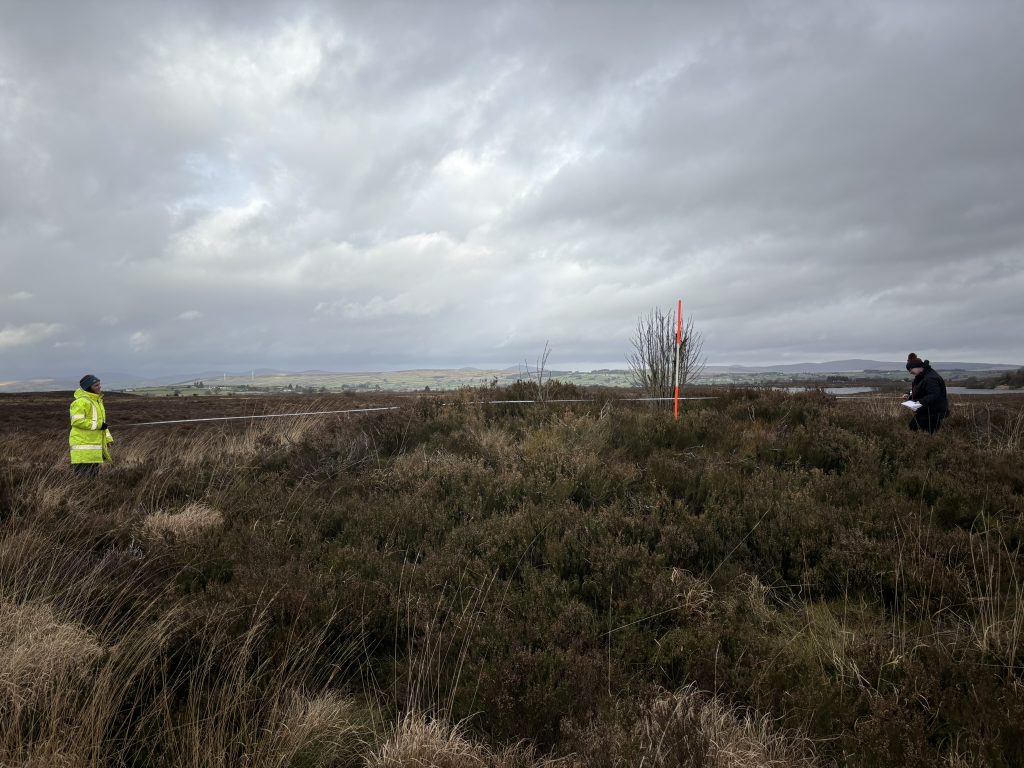
A neolithic or bronze age burial Cairn, estimated to be around 3000-5000 years old, has been discovered at The Murrins Area of Special Scientific Interest, near Omagh, during major peatland restoration works to enhance water quality in the Fane and Strule catchments. The cairn will now become a recorded monument on the Historic Record of Northern Ireland.
The discovery was made as part of the PEACEPLUS Protecting Shared Waters Project, which is piloting nature-based solutions to enhance water quality in these two vital drinking water catchments.
Led by NI Water, this work is part a €7.5 million project supported by PEACEPLUS, a programme managed by the Special EU Programmes Body (SEUPB) and endorsed by both DAERA in Northern Ireland and the Department of Housing, Local Government and Heritage in Ireland – marking a significant step forward in collaborative water management across the island of Ireland.
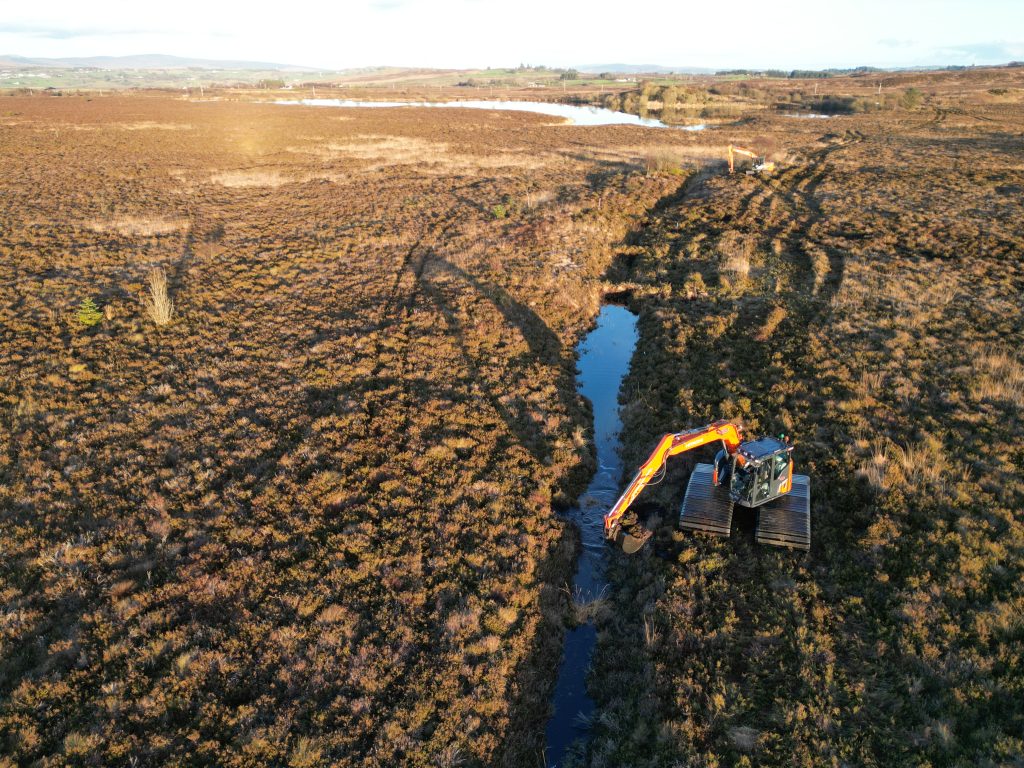
To slow the flow of water into the catchments and reduce nutrient and pollutant run-off, several hundred peat dams, several thousand meters of peat bank reprofiling, and hundreds of meters of bunding have been completed at The Murrins by contractor C & B McErlean and led by local nature conservation charity Ulster Wildlife.
Ahead of the work on the ground beginning, special imaging technology pictures were collected at the site and inspected for any suspected archaeological sitings. This has turned up a number of interesting structures, with one of particular potential archaeological interest.
Ulster Wildlife, working with two members of the historic environment division, carried out a closer inspection and confirmed a previously unknown neolithic or bronze age burial Cairn (3000-5000 years old) in good condition. This will now become a recorded monument on the Historic Record of Northern Ireland.
The team also recently welcomed pupils from the nearby St. Brigid’s Primary School, Mountfield near Omagh, to come and see restoration in action at the site and then to learn in the classroom about the importance of peatlands for water quality, biodiversity, and climate change.
Diane Foster, Protecting Shared Waters Project Manager, explains:
“The project will pilot a mix of nature-based solutions (NbS) and agronomic advice in selected sub-catchments of the Strule and a community-based approach to installing NbS and water conservation measures in a selected sub-catchment of the Fane. It aims to reduce environmental pressures on shared water bodies and support their recovery to good or high ecological status. In doing so, it will also enhance the quality and reliability of raw water at abstraction points – an essential step in ensuring safe, clean drinking water for communities on both sides of the border.
“We were really excited to find out that not only had we contributed to improving raw water quality, but we had also identified a bronze age cairn and are protecting important archaeological sites.
“We are delighted to work on this important project with our key partners: Uisce Éireann, Agri-Food and Biosciences Institute, Ulster Wildlife, The James Hutton Institute and The Rivers Trust. We will keep relevant communities informed as work progresses.”